Discover Lifestyle Medicine in Action! Download our free “Age Better in 30 Days” wellness guide.

The Ultimate Home Gym Equipment Guide (For Any Budget)
Build a home gym without wasting money. This guide walks you through exactly what to buy first, what to add as you get stronger, and which items are completely optional. From dumbbells and resistance bands to TRX straps, kettlebells, stability tools, and cardio options—you’ll learn how to create an effective, budget-friendly setup at any level.
FUNCTIONAL FITNESS
John Burke RPh, CFMP, CPT
11/24/20254 min read

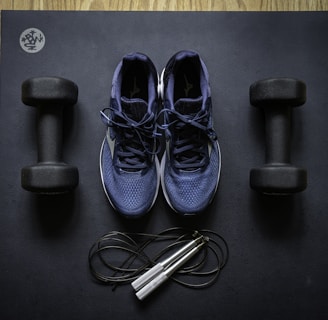
Start small. Build smart. Get stronger at home — without spending a fortune.
You do not need a fully stocked gym or expensive machines to get in great shape.
Most people can build strength, mobility, and cardiovascular fitness using just a few affordable pieces of equipment — and add more only as needed.
This guide walks you through exactly what to buy first, what to add as you progress, and which items are truly optional. Whether you’re building your first home setup or upgrading an existing space, this step-by-step approach will keep you strong, safe, and injury-resistant without overwhelming your budget.
Why a Home Gym?
Because convenience drives consistency.
With your equipment always within reach, you’re more likely to get your workouts in — no commute, no waiting for machines, no excuses. And with smart equipment choices, you can replicate almost every major movement pattern right from your living room, garage, basement, or even a small apartment.
1. Start Here: The Essential Equipment (Low Budget)
These are the foundational tools that form the backbone of an effective home strength program. You can get started with just one or two pieces from this list.
✔ Dumbbells
If you only buy one piece of equipment, choose dumbbells.
They’re incredibly versatile and allow you to train every major muscle group with movements like presses, rows, squats, deadlifts, lunges, and carries.
Start with:
One light–moderate pair (8–15 lbs for most beginners)
Add heavier pairs as you get stronger
Adjustable dumbbells work great for small spaces
Dumbbells allow progressive overload — the #1 driver of strength and muscle gain.
✔ Resistance Bands (Three Types You Actually Need)
Not all bands are the same, and each type serves a different purpose. A well-rounded home gym uses all three:
1. Mini Loop Bands
Perfect for:
Glute activation
Lateral band walks
Hip stability
Warm-ups and corrective work
These are small, cheap, and incredibly effective for building strong hips and preventing knee pain.
2. Tube/Cable Bands with Handles
These mimic cable machines and allow smooth resistance through the whole range of motion.
Great for:
Rows
Chest presses
Shoulders
Biceps & triceps
If you train upper body at home, these are gold.
3. Long Heavy-Duty Loop Bands
These are the big continuous-loop bands that work well for:
Assisted pull-ups
Adding resistance to squats, deadlifts, hip thrusts
Mobility and stretching
Together, these three band types can replace most machines in a traditional gym.
✔ Exercise Mat
A good mat protects your joints during floor work, planks, stretching, and mobility sessions. This is a comfort essential — especially on hardwood or basement floors.
✔ Foam Roller
Foam rolling improves mobility, reduces stiffness, and prepares your muscles and fascia for better movement. Think of it as "prehab" and recovery in one.
2. Level Up Your Setup (Moderate Budget)
Once you’ve built strength and consistency, consider adding these versatile upgrades. Pick just one at a time — you don’t need everything immediately.
✔ TRX / Suspension Trainer
A suspension trainer delivers a full-body workout using bodyweight and gravity. It improves strength, core stability, mobility, and joint control.
The return on investment is enormous — and it stores easily.
✔ Kettlebells
Add a dynamic training element to your routine.
Great for:
Swings
Goblet squats
Deadlifts
Presses
Turkish get-ups
Kettlebells build both strength and power in a compact, highly effective tool.
✔ Stability Ball (Swiss Ball)
This adds instability for:
Core training
Hamstring curls
Wall squats
Balance work
Rehab and posture
Inexpensive and shockingly versatile.
✔ Pull-Up Bar
One of the best additions to any home gym.
Pair with a heavy-duty loop band for assisted pull-ups until you build full strength.
Pulling strength = essential for posture, shoulder health, and longevity.
✔ Medicine Ball / Slam Ball
Once you’ve developed basic strength, power training becomes important — especially as we age.
Slam balls and medicine balls let you train rotational power, slams, throws, and athletic movements safely.
✔ Balance Disc or Balance Pad
Balance work is an often-missing piece that dramatically improves ankle stability, knee control, and core strength.
Prevents ankle and knee injuries
Helps with fall prevention in older adults
Enhances single-leg strength
Builds proprioception (your brain’s “GPS”)
Great addition for runners, hikers, and anyone with a history of ankle sprains
Tools to choose from:
Balance Disc → air-filled, more challenging
Balance Pad → foam, gentler instability
These store easily and elevate your routine without taking up any space.
3. Advanced Add-Ons (Higher Budget, Totally Optional)
These are nice-to-have, not need-to-have.
✔ Adjustable Bench
Expands dumbbell exercise options and helps with presses, step-ups, and elevated work.
✔ Weighted Vest
Adds difficulty to walking, stairs, push-ups, and pull-ups without needing heavier weights.
✔ Barbell + Plates
Only necessary if you want heavy squats, deadlifts, or advanced Olympic lifting. Most people never need this for general fitness.
4. Cardio Equipment: Truly Optional
Cardio health is crucial — but you don’t need machines to improve it.
Free Options:
Walking
Jogging
Hiking
Swimming
Stairs
Bodyweight circuits
HIIT protocols like the Norwegian 4 × 4
These are more than enough for cardiovascular fitness.
If you enjoy machines and have the budget:
Stationary bike
Treadmill
Rowing machine
Elliptical
Buy cardio machines only if you love them and will use them consistently.
5. How to Build Your Home Gym Step-by-Step
Phase 1 – $30–$80: Starter Kit
Dumbbells
Mini loop bands
Tube bands with handles
Exercise mat
Phase 2 – $100–$250: Strength Upgrade
TRX
Long loop bands
Foam roller
Stability ball
Balance disc or balance pad
Phase 3 – $250–$600: Well-Rounded Home Gym
Kettlebells
Pull-up bar
Medicine/slam ball
Adjustable bench (optional)
Phase 4 – $800–$2,000+: Full Setup
Barbell + weight plates
Cardio machine
Weighted vest
Extra kettlebells
Final Thoughts: Build as You Grow
You do not need to purchase everything at once.
You do not need an expensive Peloton or a full rack of barbells.
You do not need a giant dedicated space.
Start with the basics.
Master your movements.
Add equipment only when your strength — and your budget — grows.
A smart, minimal home gym can take you farther than you think.
About Pharm to Function
Pharm to Function is a health education platform focused on functional medicine, metabolic health, and systems-based prevention.
Built by a pharmacist and functional-medicine practitioner, Pharm to Function translates complex physiology into clear, practical education.
Stay Connected
Pharm to Function releases new learning guides, research summaries, and educational resources regularly.
You can join the education list to receive updates and foundational materials.
© 2025 Pharm-to-Function | All Rights Reserved